The Bhutan Project
Twenty-Six Nights in Thimphu
A night in the lab
The laboratory we set up in Thimphu could accommodate two contemplative experts for overnight sleep each night. There were two bedrooms. Each opened onto a larger room where we set up our amplifier systems and computers to make the recordings.
We applied the electrode sensors in the central room. Then each practitioner was led to a bed for meditation practice, followed by overnight sleep. The physiological signals from the brain and body were amplified using an OpenBCI EEG system and sent by Bluetooth to a laptop just outside each bedroom. Members of the research team monitored the recordings continuously from evening until morning.
Practitioners could signal during their sleep, even though most muscles of the body are normally paralyzed while dreaming. They used pre-agreed movements of the eyes, left and right, and changes in breathing, sniff patterns, to convey information about their experience. For example, when they recognized a dream as a dream, they moved their eyes quickly left and right two times in succession (see the figure under “What we saw”).
Each morning, the practitioners reported their sleep experiences and dreams through an extensive interview process known as microphenomenology.
Video 1. Preparing participant for an overnight recording by monastic scientists.
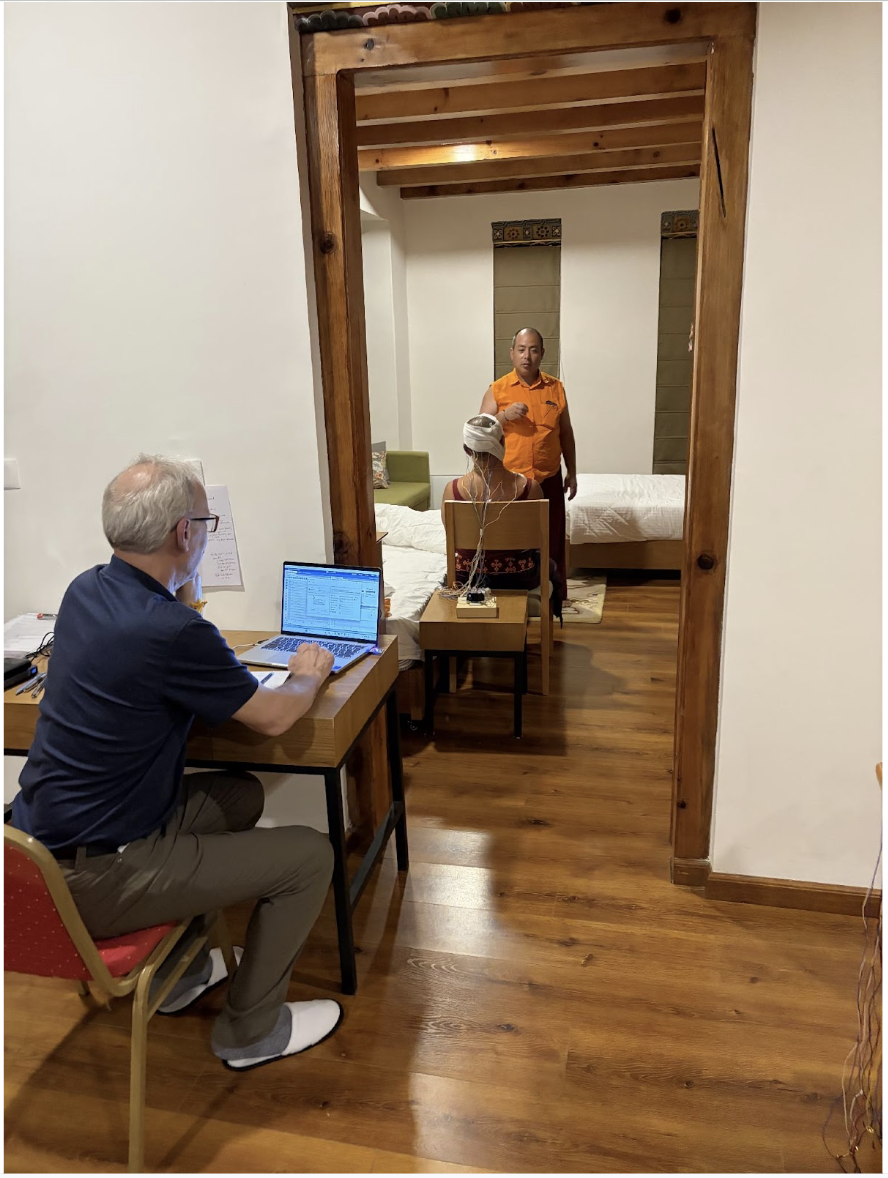
A laptop outside each bedroom door received the signals by Bluetooth. Members of the team monitored the recordings from evening until morning. Photos: the Bhutan Project team.
Why sleep, and why Bhutan
Various meditation practices produce benefits for people and for society. These practices are generally engaged when people are awake. Some, however, are engaged during sleep, and those are the ones under study in this project.
The project extends our earlier research on contemplative sleep practices in practitioners from western cultures (Torres-Platas et al., 2026, preprint). Here the focus is on contemplative practices from the Vajrayana Buddhist tradition in the Kingdom of Bhutan. What is novel is that the practices are engaged during sleep, by practitioners who have devoted extraordinary effort to developing the necessary skills of lucidity and influence over the dream content. These experts are able to direct their sleep in particular directions through a combination of efforts before sleep, during sleep and after sleep. Expert practitioners of dream yoga, for example, can use their dreams to engage in mental activities that lead to profound personal insight and spiritual growth.
Such practices could be attributed to many cultures, but they are particularly well documented in the Indo-Tibetan Buddhist literature, where they are known as Sleep Yoga and Dream Yoga. Sleep Yoga involves mental activities that may not resemble dreaming at all. Dream Yoga is specifically focused on working with dream experiences, in a set of ways documented in classic texts and still practiced today. According to those texts, training in these practices can help practitioners transcend maladaptive behavioral habits and mental limitations, because dreams offer a unique opportunity to creatively work with the mind. Expert practitioners reportedly gain increased emotional flexibility and compassion, along with a profound understanding of how the reality of our waking experience is “like a dream.”
One premise of our work is that lucid dreaming, recognizing that one is dreaming while still asleep and dreaming, provides a special opportunity for this kind of deep mental insight.
Bhutan has a remarkable wealth of contemplative knowledge and a long, living tradition of Vajrayana Buddhist practice. These traditions are found throughout the Himalayan region. Bhutan, though, offers a particularly valuable setting, because advanced contemplative practices, including those related to Dream Yoga, continue to be transmitted and practiced within established monastic and retreat traditions. It gave us an extraordinary opportunity to collaborate with highly experienced practitioners and scholars who have preserved this knowledge across generations.
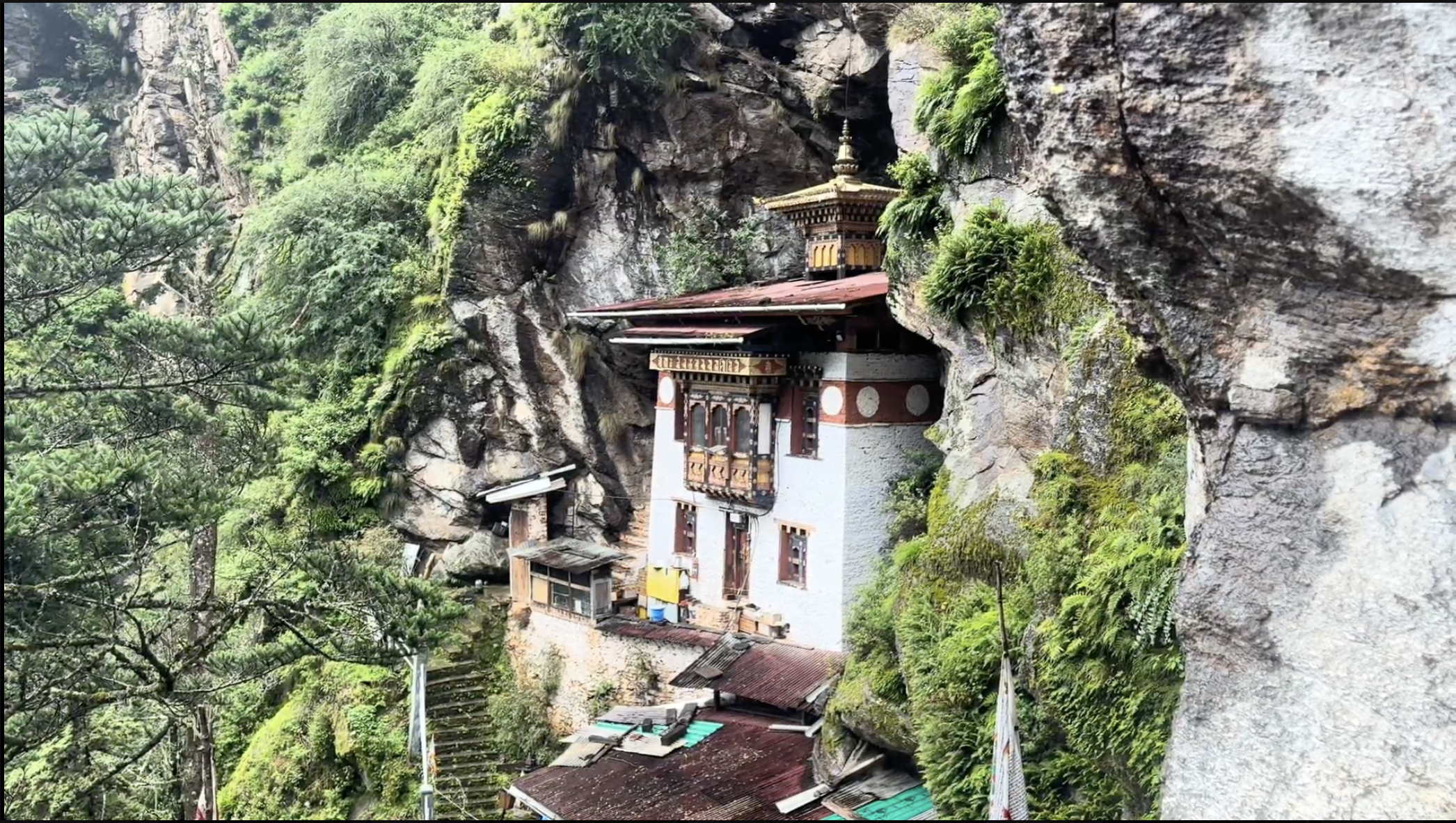
Paro Tagsang
The people who made it possible
Our Bhutanese collaborators were essential to making this research possible. We worked closely with two Khenpos, Khenpo Phuntsho Gyaltshen of Vairochana’s Royal Home School in Thimphu and Khenpo Ugyen Norbu of Chorten Gangkha Monastery in Paro, who helped us identify and connect with highly experienced contemplative practitioners across Bhutan. Together they traveled to different regions of Bhutan to meet practitioners whose expertise would have been extremely difficult for an outside research team to find on its own. In addition, Khenpo Namchak Dorje, a Bhutanese Ph.D. student at the University of California, Berkeley, provided excellent expertise both in translating across languages and in the interviews for dream reports and microphenomenology. We are also grateful to Dago Drugpa, who provided local expertise in polysomnographic methods and translation. The staff at the Lemon Tree Resort were also very accommodating.
The participants also deserve our deep appreciation. They represented an extraordinary depth of contemplative experience. Some were retreat masters. Some had completed multiple traditional three-year retreats. Others were senior monastic practitioners. The Khenpos’ deep knowledge of Bhutan’s contemplative communities allowed us not only to reach these practitioners, but also to understand their training and practices within the traditions from which they emerged. This collaboration was fundamental to bringing traditional contemplative expertise and modern scientific investigation together in a respectful and meaningful way.
The team also included monastic scientists. Through the science education program developed at Emory University, the Emory Tibet Science Initiative, monks and nuns have been trained in science. A select group of these monastic scholars gained additional hands-on training in the neuroscience methods used to research sleep. After a program of classroom teaching in science, they were trained in conducting scientific research and applied their skills to studies of lucid dreaming and Dream Yoga. Three of them, Geshe Tsering Phuntsok, Geshe Jamyang and Geshe Wangdu, worked alongside us in Thimphu. This work was specifically endorsed by a letter from His Holiness the Dalai Lama.
We received advance approval for this research from the Research Ethics Board at the medical school in Bhutan. Equipment was brought to Bhutan from Northwestern University and from the Drepung Loseling Meditation and Science Center in India.
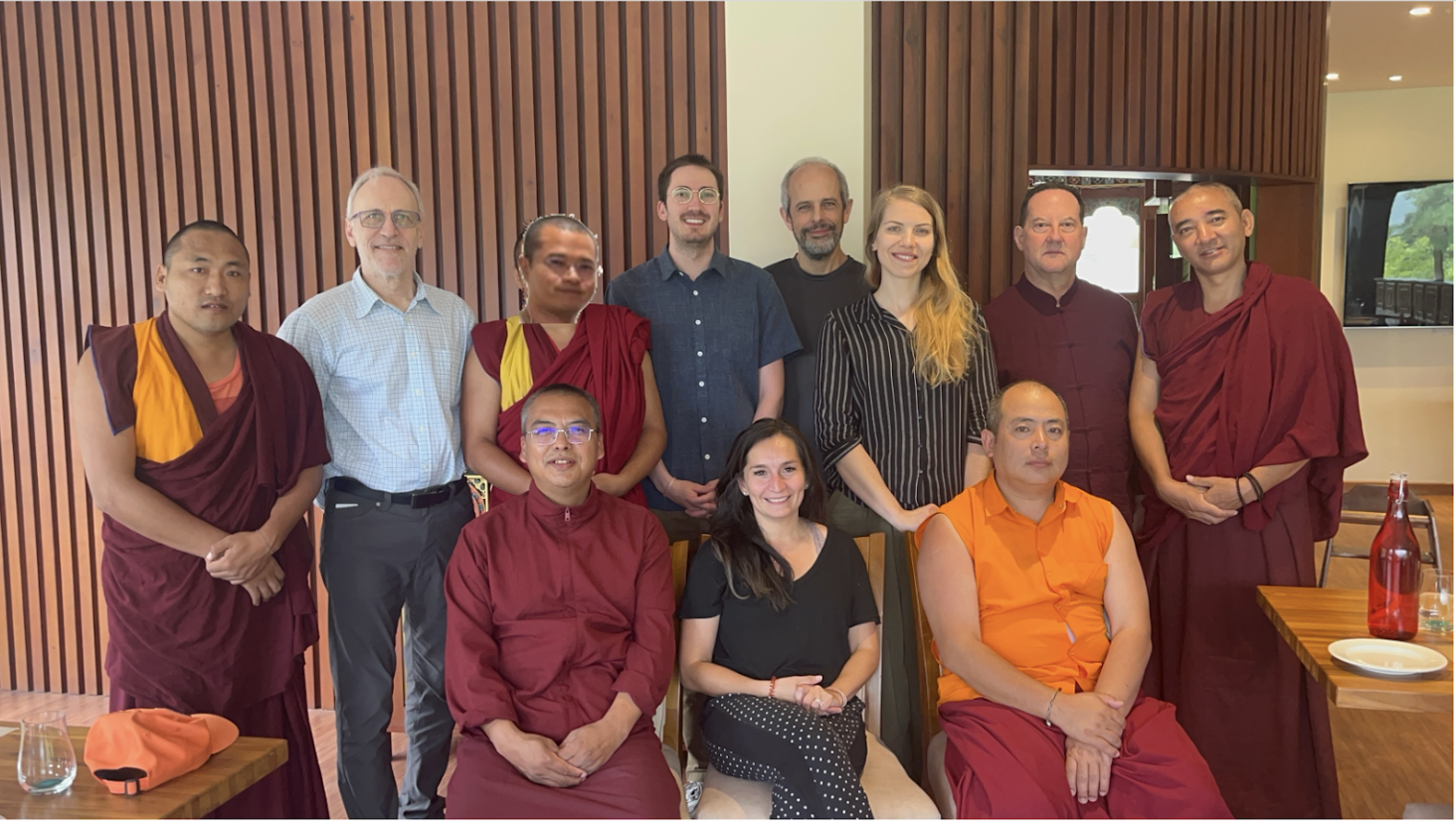
The research team in Timphu.
Team members in Thimphu
Northwestern University, USA: Ken Paller, Daniel Morris, Gabriela Torres-Platas
University of Virginia, USA: David Germano
Monash University, Australia: Ema Demšar
Hawaii, USA: Ira Zunin
Emory Tibet Science Initiative: Geshe Tsering Phuntsok (Drepung Loseling Monastery, India), Geshe Jamyang (Gaden Gomong Monastery, India), Geshe Wangdu (Rato Monastery, India)
Bhutan: Khenpo Phuntsho Gyaltshen (Vairochana’s Royal Home School, Thimphu), Khenpo Ugyen Norbu (Chorten Gangkha Monastery, Paro), Khenpo Namchak Dorje (University of California, Berkeley), Dago Drugpa (hospital affiliation in Thimphu)
Why these practitioners matter scientifically
These practitioners are not simply experienced meditators. Many have dedicated years, or decades, to intensive contemplative training, including practices specifically designed to cultivate awareness during sleep and dreams. This makes them an exceptionally rare population for investigating how sustained mental training may shape the sleeping mind.
Scientists study elite athletes and musicians to understand the upper limits of physical and cognitive ability. In the same way, studying expert contemplative practitioners offers a unique opportunity to investigate the boundaries of human consciousness. Their expertise lets us ask questions that would be difficult to address in the general population. To what extent can awareness and intentional cognition persist during sleep? Can these capacities be systematically trained? And what can these exceptional practitioners teach us about the potential of the human mind?
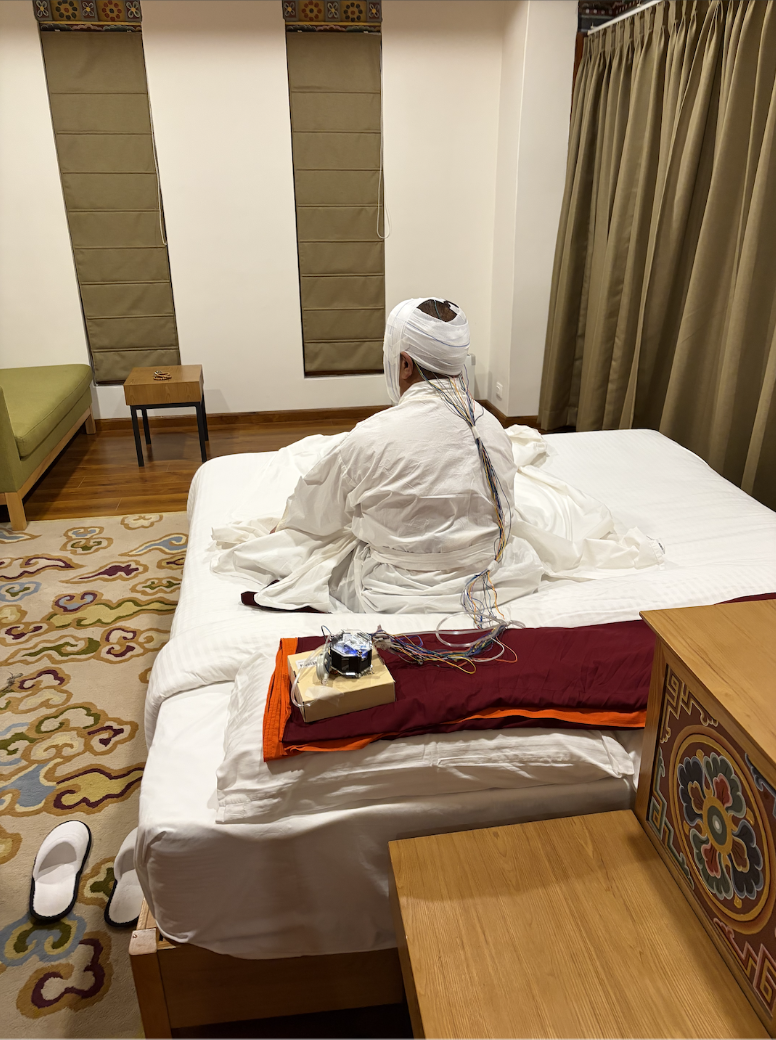
Meditation practices before bedtime.
How do you talk to someone who is asleep?
How is this research even possible, given that dreams are normally a completely private experience? People may talk about their dreams when they wake up, but that evidence alone is insufficient for a neuroscientific study of dreaming. Over the past few years, we and others developed new methods to support this sort of research.
We use standard polysomnography to record the electrical signals of sleep physiology. These signals are necessary to confirm periods of sleep and to identify sleep stages, such as REM sleep. We also engage in two-way communication during lucid dreaming. As we have shown in prior studies, we can present stimuli that infiltrate dreams, such as questions a dreamer can answer with coded signals, using volitional control of breathing or eye movements. Other body movements are limited by the muscle atonia of REM sleep. These deliberate signals provide precise time-stamps of important episodes and the corresponding brain activity, and they can be corroborated by post-sleep reports.
The reference study for two-way communication was written by Karen Konkoly and colleagues (2021) and published open-access in Current Biology. Dreamers in four laboratories answered simple questions from inside REM sleep.
What we saw
Starting on July 21 and continuing until August 3, the team worked with two contemplative experts visiting the lab every night. Most came for two consecutive overnight stays, some for more, some for less. In total, we conducted 26 overnight recordings with 13 practitioners. We observed evidence of contemplative practices occurring across the night, not only during REM sleep, where lucid dreaming is most commonly studied.
One particularly remarkable set of observations came from a practitioner who responded frequently to external cues with pre-agreed, intentional signals during multiple sleep stages, with the exception of deep N3 sleep. The practitioner later reported engaging in Dream Yoga practices during these periods. Observing this pattern of responsiveness across such a large portion of the night, together with the practitioner’s subsequent reports, raised fascinating questions about how awareness and intentional practice may persist across different states of sleep.
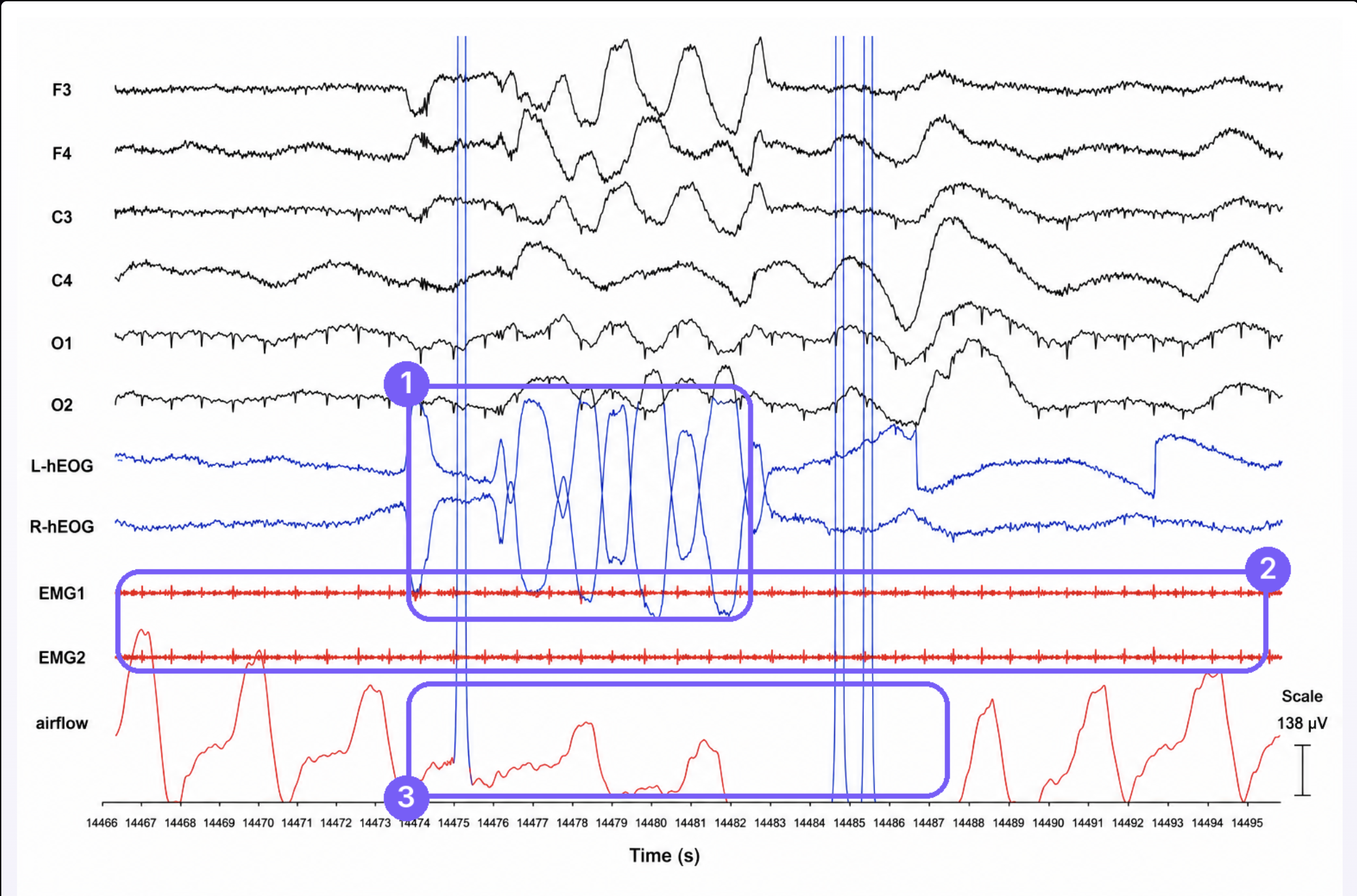
Figure. Communication with participant seven during a lucid dream, time-stamping his dream yoga practice. 1 About four hours into the night, the practitioner produces one sniff signal, followed by six left-right eye signals that appear as mirror images on the two EOG traces. He then produces two sniffs to mark the start of his practice. In later epochs he produced four sniff signals to mark the end of the practice (not shown). The large slow waves on F3, F4 and C3 at the same moment are those eye movements bleeding into the nearest brain electrodes, not brain rhythms. 2 Chin muscle tone stays flat throughout: the body is in REM paralysis. 3 The sharp spikes in the airflow trace are the sniff signals, one before the eye signal and two after it. Between them, breathing goes shallow while the eye signal is made.
The dream yogis’ first-person perspective
A wealth of information about participants’ lived experiences came from the microphenomenology team. While the recording team worked through the nights, David Germano, Ema Demšar, and Khenpo Namchak Dorje spent the days interviewing participants in depth about their experiences during the night. Dream reports and other nocturnal experiences were examined using microphenomenological methods.
This component was particularly important in this context, not only to understand the experience, but also because none of the practitioners spoke English. Although some members of the research team spoke Tibetan, standard dream reports alone would not have provided the level of detail needed to understand what transpired during participants’ dreams. The microphenomenological interviews therefore allowed us to reconstruct these experiences in much greater detail and to relate the participants’ first-person accounts to the physiological events recorded during the night.
David is a Buddhist scholar with extensive experience grounding this work in a thorough analysis of contemplative practices in the context of Buddhist religious traditions, philosophy and culture. Ema is a trained microphenomenologist with particular expertise in applying microphenomenological methods to sleep experiences, especially lucid dreaming. Their complementary expertise allows this project to combine neuroscience with humanistic investigation of experts in contemplative sleep practices.
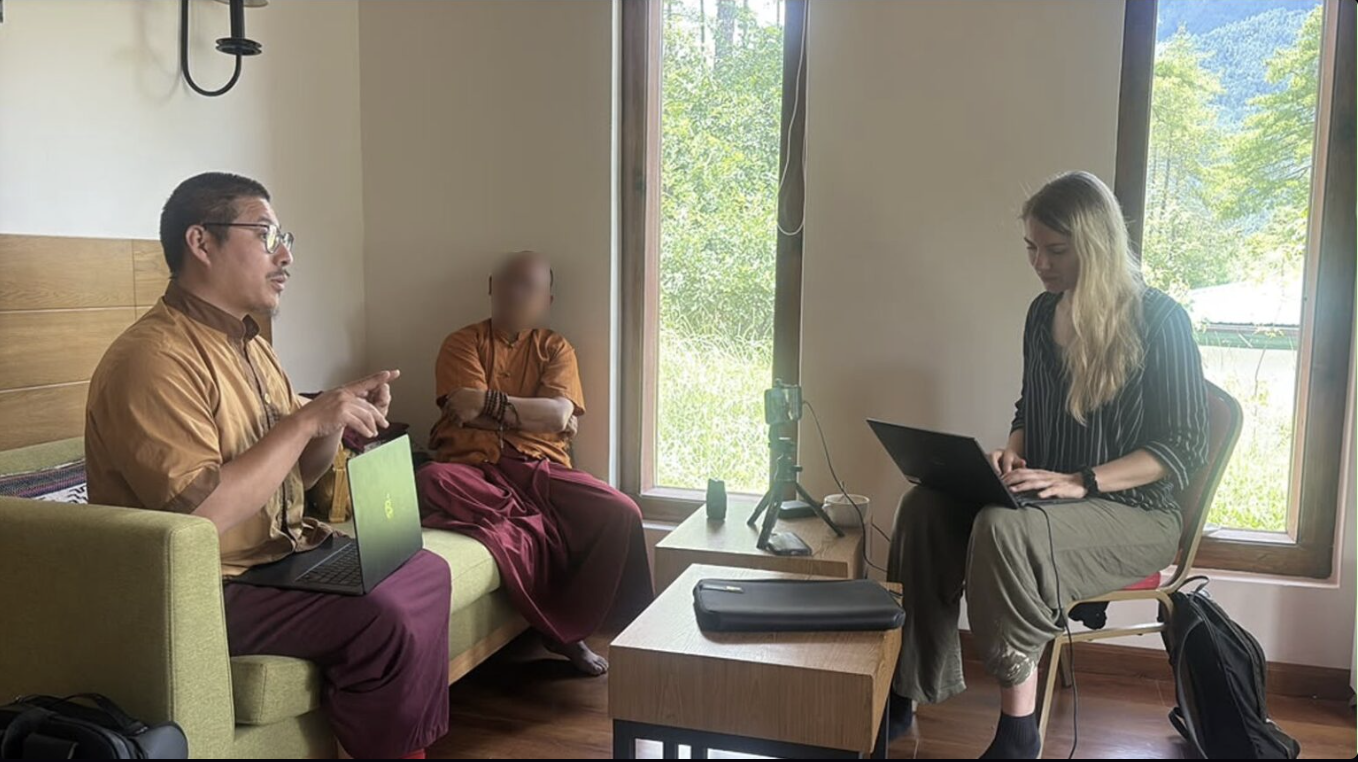
A morning interview. Practitioners reported their night through microphenomenology, a structured interview method for first-person experience. The practitioner’s face is intentionally obscured: all participants are anonymous, and no result is linked to any specific individual.
And of course, the rituals
Rituals were requested by the Khenpos and the practitioners at the beginning and at the end of the study, to set intentions at the outset and to dedicate the merit of everyone’s efforts to the benefit of all beings.
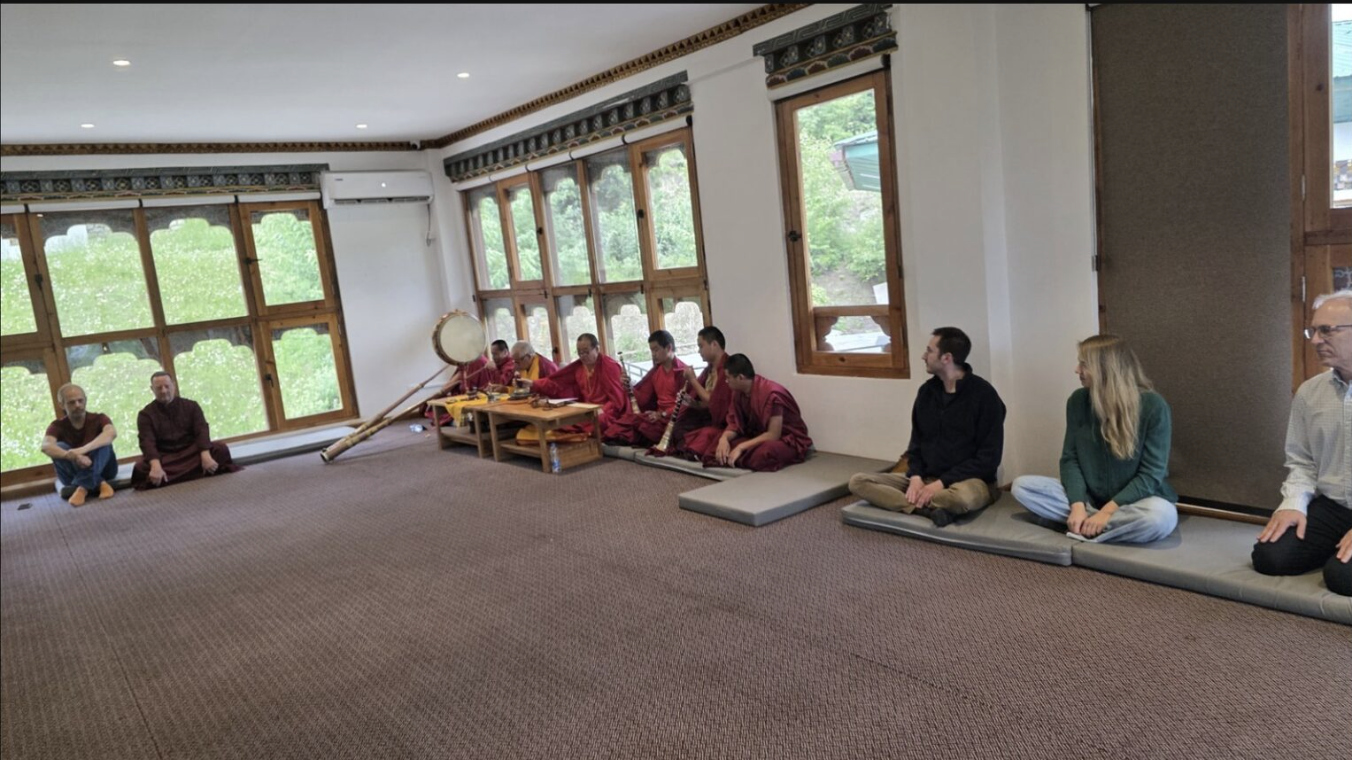
Ritual..
This video was recorded after the study was complete, at the Changangkha Lhakhang temple in Thimphu, where the closing ceremony was held.
What comes next
We hope this research will blaze a new path for understanding and extending the benefits of contemplative practices. The work may also help with the initial stages of a remarkable future goal in Bhutan: a Mind and Body Institute in the Gelephu Mindfulness City. This first project has actively engaged monastic practitioners in Bhutan, along with monks who are gaining neuroscience knowledge and working to make this sort of research possible in the country. Through these cross-cultural partnerships, it will be possible to build capacity and foster long-term collaborations that extend well beyond the scope of this project.
Funding and acknowledgments
This project was made possible through generous funding from the following organizations and individuals: the Roberta Buffett Institute for Global Affairs at Northwestern University; the government of the Kingdom of Bhutan; the Lucid Dreaming Foundation; the Emory Tibet Science Initiative; a Mind and Life Varela Award; NIH grant T32 NS047987; a grant from the Tiny Blue Dot Foundation to Northwestern University; Barry Hershey, Michael Mayzel, Anthony Lamot and Ira Zunin; and discretionary funding from the Department of Psychology, Northwestern University.
Sources
Cognitive Neuroscience Laboratory (Paller Lab), Northwestern University. https://pallerlab.psych.northwestern.edu/
Konkoly, K. R., Appel, K., Chabani, E., et al. (2021). Real-time dialogue between experimenters and dreamers during REM sleep. Current Biology, 31(7), 1417-1427. https://doi.org/10.1016/j.cub.2021.01.026
Morris, D. J., Torres-Platas, S. G., Konkoly, K. R., et al. (2026). Inducing lucid dreaming based on a contemplative practice of compassion. Brain Sciences, 16(3), 315. https://doi.org/10.3390/brainsci16030315
Torres-Platas, S. G., Morris, D., Konkoly, K., Demšar, E., et al. (2026). Intentional lucid dreaming with a transformative learning agenda. Preprint, Research Square. https://doi.org/10.21203/rs.3.rs-8745420/v1
LaBerge, S., Nagel, L. E., Dement, W. C., & Zarcone, V. P. (1981). Lucid dreaming verified by volitional communication during REM sleep. Perceptual and Motor Skills, 52(3), 727-732. https://doi.org/10.2466/pms.1981.52.3.727
The Emory-Tibet Science Initiative, Emory University. https://tibet.emory.edu/
Letter of support from His Holiness the Dalai Lama. https://faculty.wcas.northwestern.edu/~paller/HHDLSupportLetter.pdf
Gelephu Mindfulness City, Bhutan. https://gmc.bt/